One of VMBA’s most important roles is to serve as the voice for mountain biking in the Statehouse, working to develop and pass legislation that helps expand access and increase support for trails, advancing more efficient and effective regulations, and responding to threats that would negatively impact our Chapters, partners, and the riding experience in Vermont.
The legislative session in Vermont runs from early January into May, with the 2026 session running almost into June as lawmakers worked to both pass a budget and address major issues including education, homelessness, and health care. Called one of the hardest sessions in memory by many who have served and worked in the Legislature, the 2025-26 biennium was marked by a scarcity mindset, divisive party politics, and inertia in the face of an inability to find compromise. This environment has made it more difficult to pass legislation aimed at economic development and programmatic sustainability, as lawmakers focused their energy on crisis response and system change.
Amidst this challenging environment, we were able to celebrate some significant wins for trails this past year. Most notably, the FY27 budget includes $200,000 for a new round of VOREC Community Grants, the first since 2023 in which over $6 million was awarded to outdoor recreation projects across the state, driven by one-time COVID recovery funding. Since the VOREC Community Grant program was launched in 2019, over $2.5 million has gone to support MTB-related projects and supporting infrastructure. Securing a new round of funding this year while many other programs faced budget cuts was a major success and demonstration of our ability to showcase the power of trails as an economic engine.
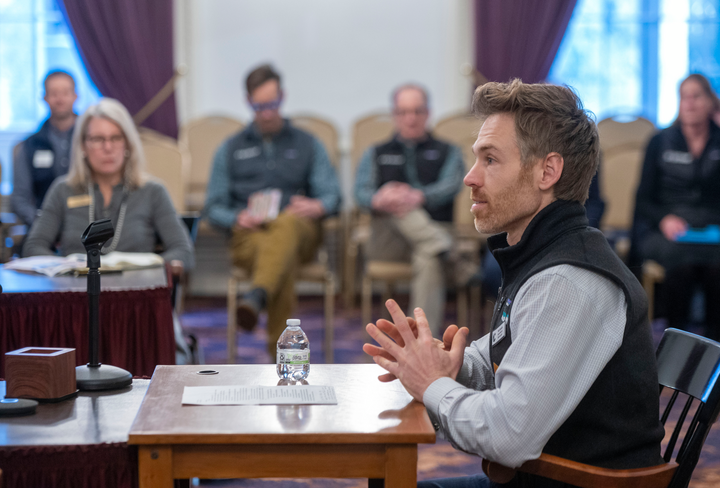
Another major win for trails and permanent public access came in the form of a Vermont Supreme Court ruling that affirmed both their prior decision in favor of the Town of Tunbridge in the court case of John Echeverria vs. Town of Tunbridge over the authority to maintain Legal Trails. We succeeded in getting the Legislature to pass language that affirmed Towns have the authority, but not obligation, to maintain Legal Trails – of which there or more than 500 miles in Vermont – and to work with trail stewardship organizations in maintaining access. The Court ruling aligned with the legislative clarification and ensured that these public rights-of-way can be stewarded in the public interest and not closed by individual landowners to specific forms of recreation.
Another major development this session was the partial repeal of Act 181, a law passed in 2024 that created new ‘Tiers’ for Act 250 permitting and instituted a permitting trigger called the “Road Rule.” Act 181 would have established both ‘Tier 1’ areas in and around downtowns to eliminate Act 250 permitting and make development easier while also establishing ‘Tier 3’ zones that would require a permit for the vast majority of projects. As the draft maps for these Tier 3 zones were shared over the winter and the implications for private landowners across Vermont – especially in rural areas became apparent – the calls for the repeal of Act 250 grew louder. VMBA was engaged early and often in the process, given the potential to effectively prohibit new trail construction in these Tier 3 areas. Ultimately, the legislature passed S.325, which retained the Tier 1 designations in Act 181 but repealed both the Tier 3 designation and the Roald Rule. While we value the goals of Act 181, this was an important recognition of private landowners’ concerns and ultimately eliminated a significant future threat to trails.
Lastly, the 2026 session saw major progress in the development of the Vermont Conservation Plan, which will lay out the process for achieving Vermont’s mandated goal of permanently conserving at least 30 percent of Vermont by 2030. Public-access recreation is a designated purpose for conservation in Vermont, and trails are generally compatible with other conservation goals, like biodiversity protection, when thoughtfully designed and built. VMBA, through our leadership of the Vermont Trails & Greenways Council, serves on the Technical Advisory Committee for the Plan and helped organize an Outdoor Recreation Listening Session this March to weigh in on the Draft Framework. We are glad to see outdoor recreation included in the plan as a means to connect people with conserved spaces, and are working to see trail-based recreation as a powerful driver for future land conservation and equitable access. The final Plan, which is co-owned by the Vermont Housing & Conservation Board and the Agency of Natural Resources, is due to the legislature later this year.
All told, and especially considering the current environment of austerity and many serious challenges facing Vermont, 2026 was a successful legislative session for VMBA. That said, we remain committed to advocacy goals that did not see success during this biennium, including pursuing a mechanism to recognize landowners who host public-access recreational trails. We helped draft legislation (H.147/S.79) that would have taken the first steps towards such a program, though neither the House or Senate version passed out of committee.
Our advocacy work is powered by our Members and we could not do it without your support. Please feel free to weigh in with comments, questions, or ideas below, and stay tuned as we gear up for even more success in Montpelier in 2027.