With (false) spring in the air, we’re also creeping up on the halfway point of the 2026 Legislative Session. The true midway mark for those familiar with the Statehouse is known as ‘Crossover,’ the deadline by which bills must pass out of their respective House or Senate Committees so that they can ‘cross over’ to the other Chamber’s corresponding committee. In short, it’s crunch time for many legislators and advocates to see that the bills they care about make it through to the second half of the session.
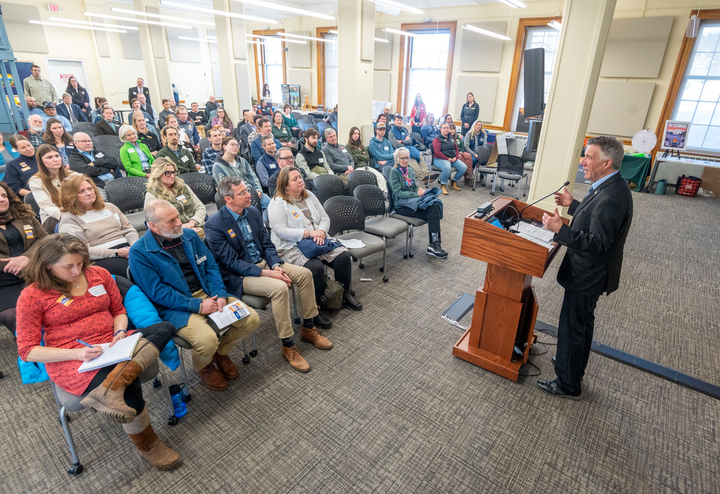
The great news is that two major priorities VMBA has been actively working on remain in play, both of which focus on providing more consistent, sustainable, and effective funding for outdoor recreation. The first of which is $500,000 in one-time funding for the VOREC Community Grant Program, which has provided nearly $2.5M in support to projects led by our office, Chapters, and partners since it was established in 2019. The program was last funded in 2023, and 2026 will mark the third year without any new awards, 75% of which have gone to trail projects historically. This new one-time funding is part of the Governors Recommended Budget, making it likely – but not guaranteed – to make it through the fiscal trimming that will take place in the coming weeks. The collective advocacy efforts of the entire trails community at Outdoor Rec Day last month also left a lasting impression on legislators that may make the difference
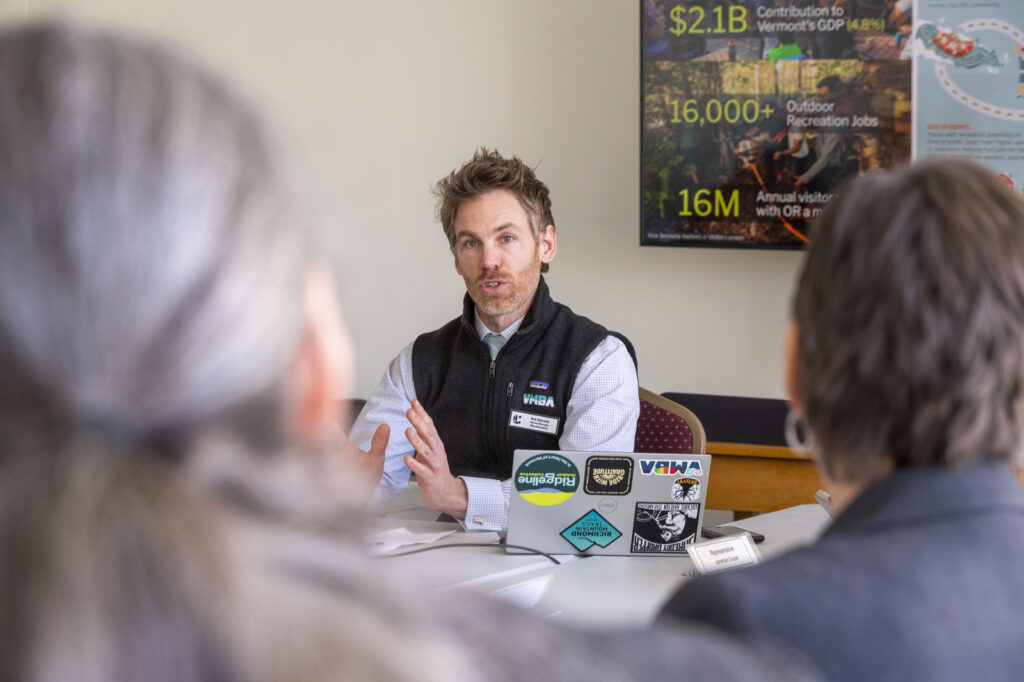
The second specific funding priority VMBA and the Vermont Trails and Greenways Council, which VMBA Chairs, has been advocating for is a modern, comprehensive economic impact assessment of outdoor recreation in Vermont. While we receive big-picture data from the federal government each year – more on that shortly – we have little understanding of where and how outdoor recreation – and trails, specifically – drive economic benefits to Vermonters. Outdoor recreation contributes nearly 5% to Vermont’s overall GDP and is responsible for over 16,000 jobs, yet we have little insights into which investments create the greatest impact and how we can best sustainably grow that economic value into the future. The last effort at a somewhat comprehensive study is now a decade old and looked at just four of Vermont’s major trail systems, and Vermont is falling behind other states that are not only investing in their outdoor rec economies, but working to better understand how to prioritize those investments. You can watch the testimony I provided recently on the Outdoor Rec Economic Impact analysis in S.327 if you’re interested in a deeper dive. On Thursday, March 12th, S.327 passed unanimously out of the Senate Economic Development Committee with both funding for this study and a new round of VOREC grants intact – a huge success for us, even if we still have a long way to go.
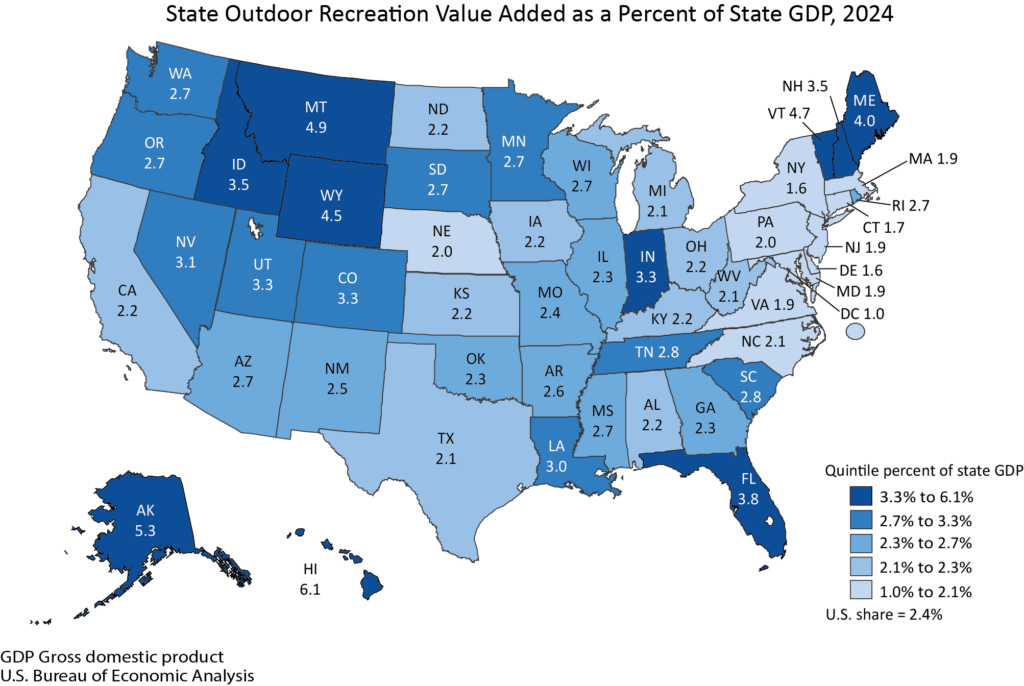
As mentioned above, the federal government publishes outdoor recreation economic impact estimates each year through the Bureau of Economic Analysis. 2024 numbers were scheduled to come out last fall, though the federal government shutdown delayed that release until now (early March). The good news? Outdoor recreation held strong as a major economic driver in Vermont, continuing to contribute over $2.1B to our state’s economy and over 16,000 jobs. The catch? These numbers are effectively flat year-over-year, with the total economic contribution of outdoor rec in Vermont growing less than 1% compared to 2.8% on average nationally. As a result, Vermont fell from #2 in the nation to #4 in terms of outdoor rec as a contributor to GDP.
Had we grown at that same national rate, outdoor rec would have generated an additional $40+ million dollars of impact on Vermont’s economy – vital at a time of economic uncertainty, austerity, and rising tax rates. Unless we invest in outdoor recreation and the tools to help it sustainably grow, we will continue to lose millions of dollars in potential economic benefit and the associated public revenue.
It’s worth emphasizing that community economic benefit is only one of the pillars of our vision for mountain biking to be at the center of healthy, economically vibrant, and environmentally sustainable communities throughout Vermont, with well-planned, accessible, and progressive trail systems state-wide. But an understanding of the economic benefits our work drives is absolutely essential to getting support for our other advocacy goals of smarter regulation, tools for landowner recognition, and more public funding for trail projects. And every half hour of testimony in the statehouse is backed by countless hours of policy development, champion building, research, and preparation. Your Membership dollars make this work possible.
Thanks for reading, and supporting our mission to ensure the sustainability of mountain biking in Vermont and thoughtfully promote exceptional riding experiences for all through advocacy, education, and community-driven stewardship.
Nick Bennette
Executive Director