
Our annual membership survey is a critical tool in our work to ensure the sustainability of mountain biking in Vermont and use advocacy, education, and community-driven stewardship to promote exceptional riding experiences for all. It helps us better understand our Members, their needs & wants, and where we are succeeding as well as where we can improve as an organization.
We will use this information to guide us as we work towards achieving the goals in our new 5-year Strategic Plan.
First, huge thanks to the 217 members who responded to our survey! We deeply appreciate both your time and the thoughtfulness of your input. It is worth noting that we did not sample members randomly, and the sample is therefore biased toward those with the time and interest to participate.
Demographics
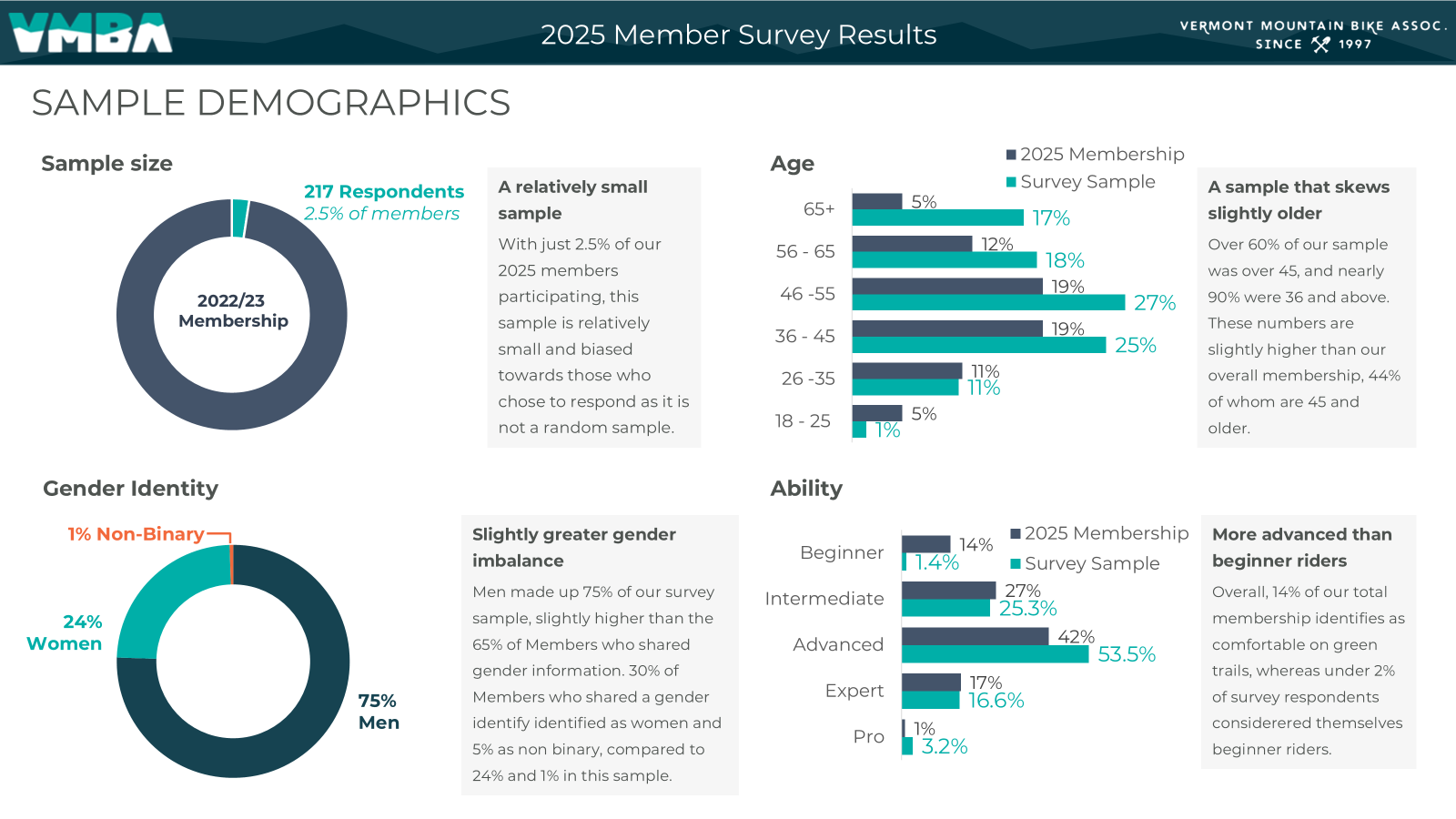
Consistent with previous surveys, three-quarters of our sample identified as men, which is slightly higher when compared to our overall membership who report a gender identity (65%). The average age of survey respondents is also slightly older than that of our overall adult membership. In terms of skill, beginner riders were underrepresented in our sample, though the overall distribution of riding ability was consistent with Members reporting this information. We also saw a shortage of Members without a Chapter affiliation responding to the survey, which is not surprising given these Members tend to be somewhat less engaged with VMBA as an organization.
All told, the survey is an imperfect slice of our membership, which we are certainly taking into account as we interpret the results. That said, it still largely reflects our Member base and provides valuable insights.
Riding Experience
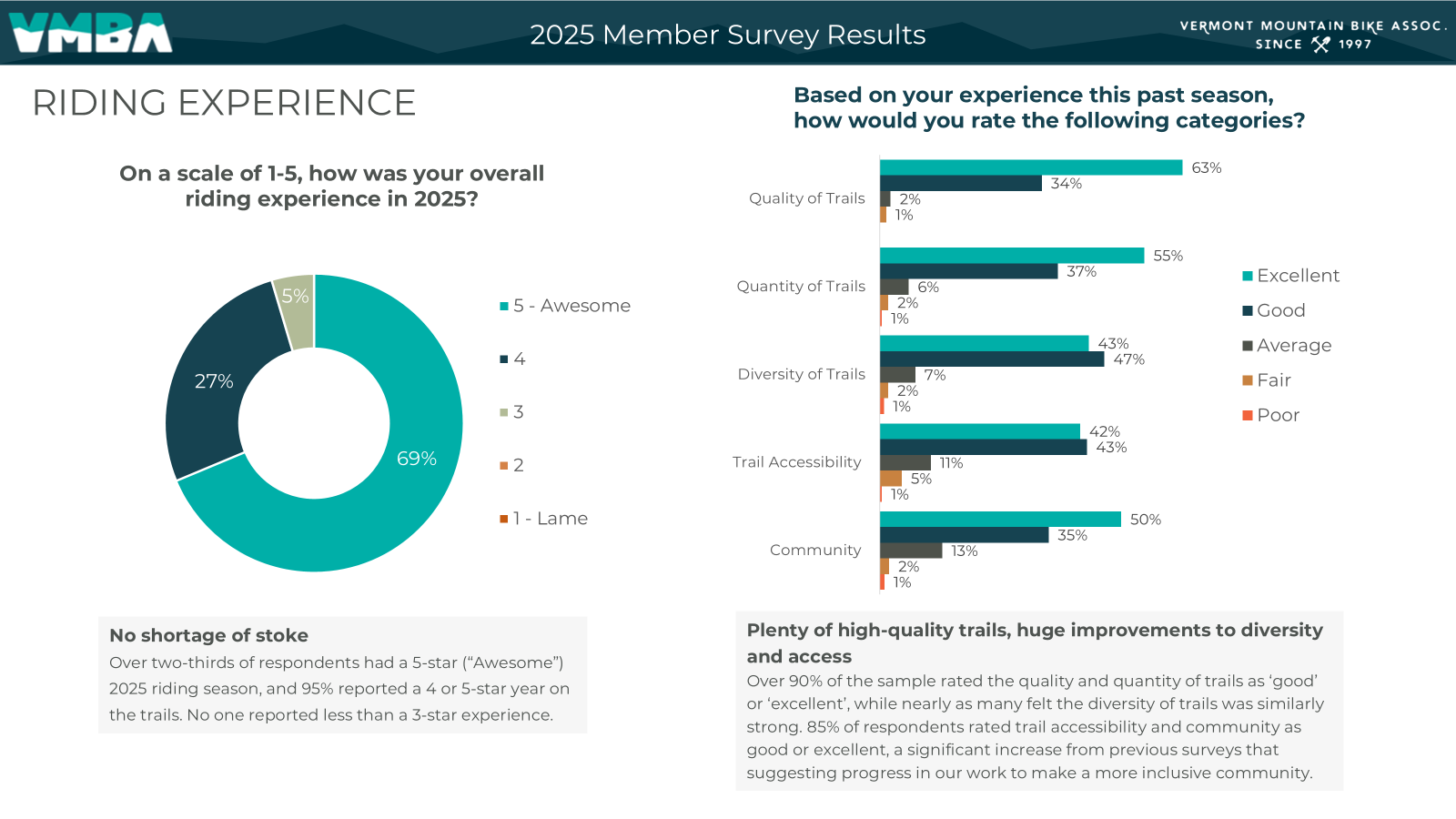
Respondents were overwhelmingly positive about their overall experience out on the trails in 2025, with an average rating of 4.7 out of 5 and nearly 70% reporting a 5-star season. And while many factors influence this overall impression, including an abnormally dry summer, it’s clear that the quality and quantity of trails is a major factor. 97% of respondents rated the quality of trails as “good” (4/5) or “excellent” (5/5), with 92% feeling similarly positive about the quantity of trails. Trail diversity and accessibility also rated nearly as high, underscoring how good the riding is here in Vermont. Community is another major driver of overall experience, which 85% of the sample identified as “good” or “excellent.” As much as we look for opportunities to improve, these findings definitely make us feel good about the progress we are making on the Trails and Community goals in our 5-year Strategic Plan.
Survey respondents also reported that they ride – a lot! In the summer and fall, over a third of the sample said they mountain biked at least 4 times per week, and in the summer, nearly 90% were out on the trail at least twice a week. Activity was decided less in the spring, with just over half of respondents riding twice a week or more, and winter riding has crept up to nearly 20% of the sample reporting they rode a similar amount. Fat biking is definitely growing!
Trail Projects
First off, kudos to the Chapters for largely pursuing projects their Members support. Over 90% of respondents approved of their primary Chapter’s trail work. In terms of opportunities, over a quarter of respondents did not agree that there were enough riding opportunities for beginners, which is likely an underestimate given that less than 2% of the sample identified as beginners themselves. On the other side of the difficulty spectrum, 14% felt there are insufficient opportunities for advanced riders. Expanding the offerings at these ends of the spectrum remains a priority for VMBA.
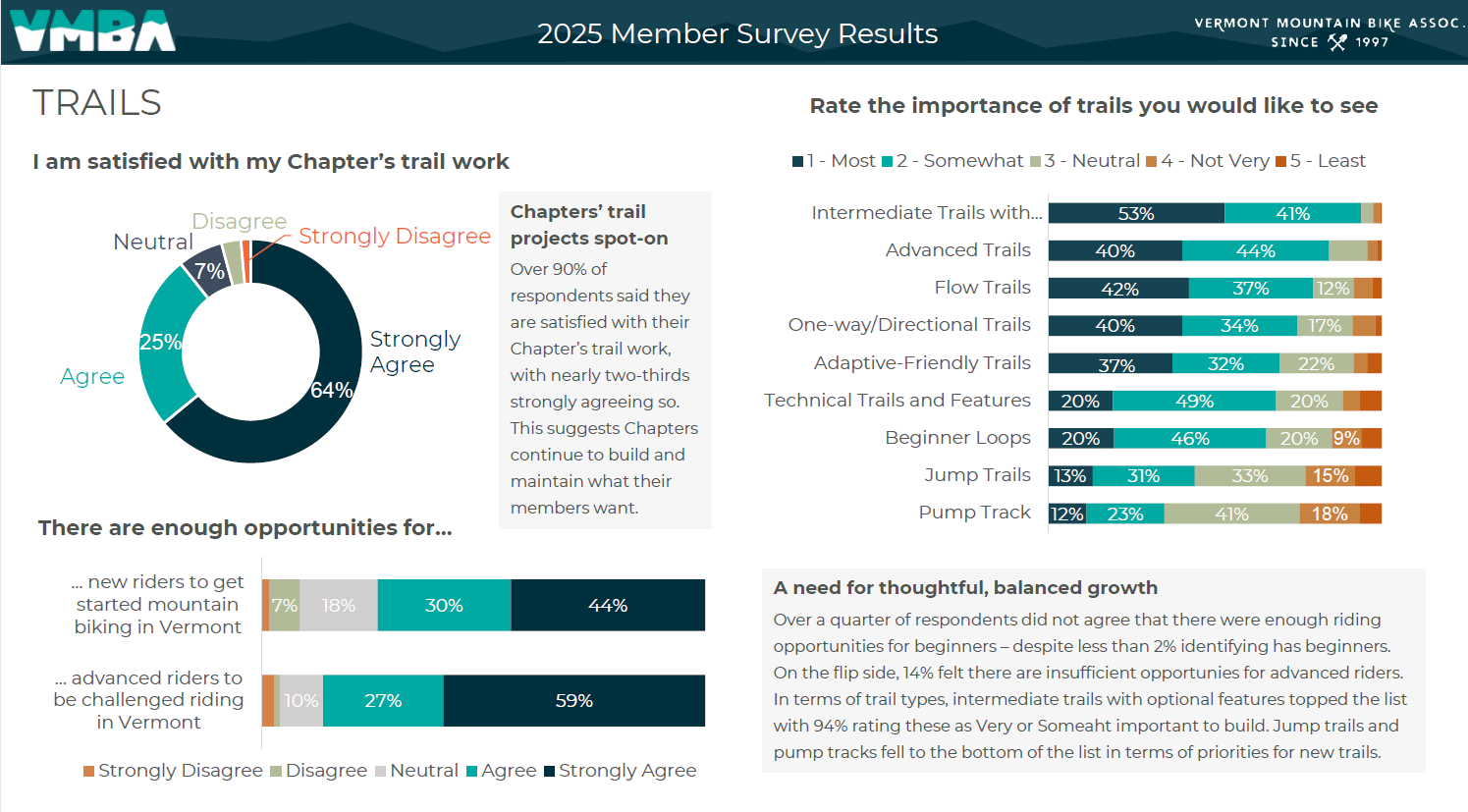
In terms of desired new trail types, intermediate trails with optional technical features topped the list with 94% rating these as Very or Somewhat Important to build. Advanced and flow trails followed closely behind in terms of overall interest, with jump trails and pump tracks falling to the bottom of the list in terms of priorities for new trails.
Our overall takeaway here is that thoughtful progression should remain a goal as we consider new trails and the needs gaps they address. Statewide, we will continue to prioritize projects at the lower and higher ends of the ability spectrum, as well as intermediate trails that deliberately integrate elements for riders to step up their skills.
Communication
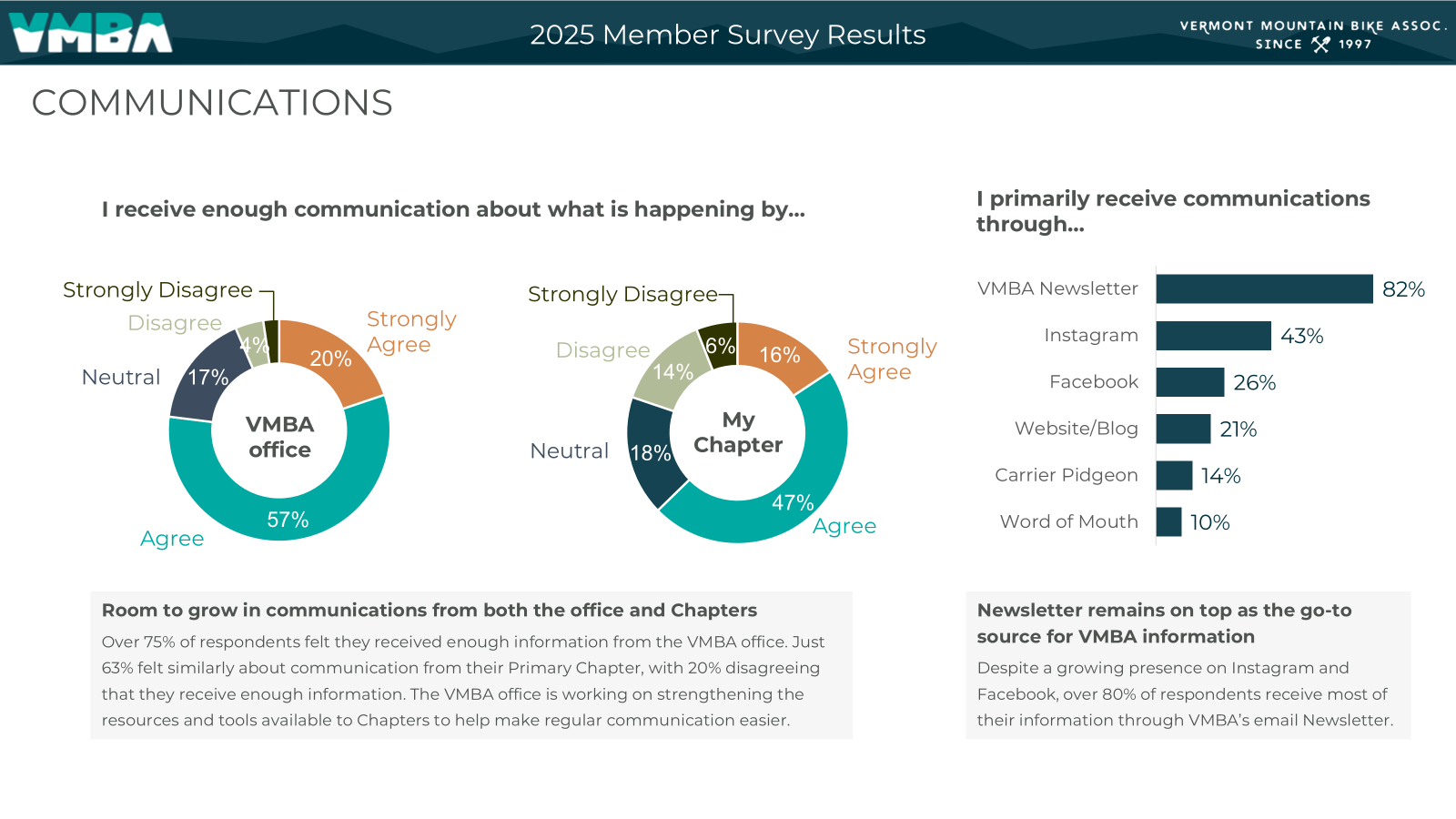
Just over 75% of respondents felt they received enough information from the VMBA office, a measure that was closer to 60% for Primary Chapter communications. The newsletter remains the go-to VMBA news source, with over 80% choosing it as their primary way to receive information.
Relatedly, a little over 70% of respondents felt informed enough about VMBA’s advocacy efforts, slightly up from our most recent Member survey. While these numbers are strong and represent a slight improvement, they also show we have room to grow in the quality and consistency of our communications to Members, especially on advocacy.
DEI
VMBA has integrated diversity, equity, and inclusion into our mission and embedded these principles into our operations. Over half of those surveyed believe DEI should be at or among our top priorities as a riding community, with 15% feeling it should not be a priority. The level of those neutral on the topic remains significant at 33%,
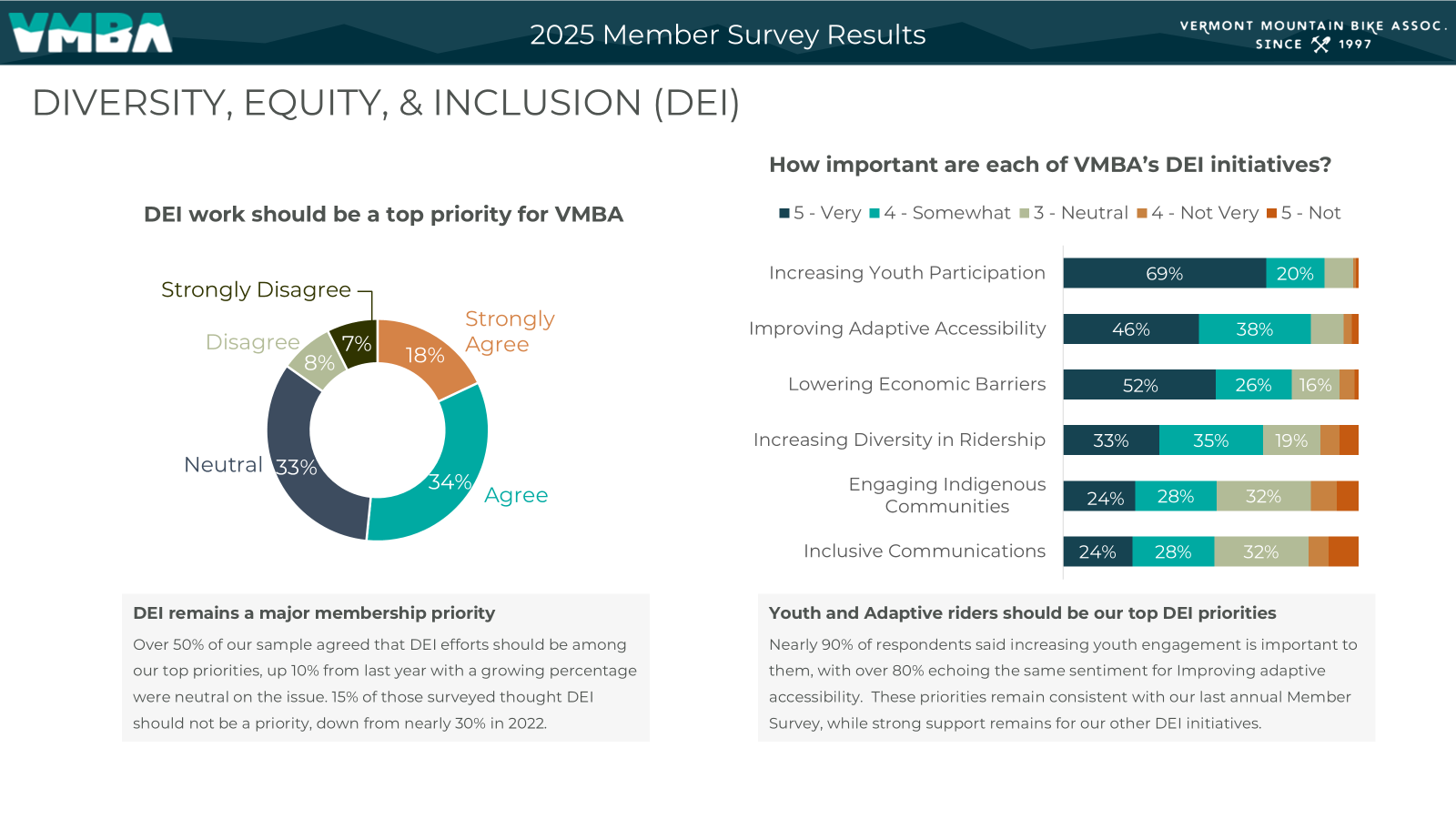
In terms of the specific DEI initiatives VMBA is currently pursuing, nearly 90% of respondents said increasing youth engagement is important to them, with over 80% echoing the same sentiment for improving adaptive accessibility. These priorities remain consistent with our last annual Member Survey, while strong support remains for our other DEI initiatives. Overall, the survey findings suggest Members generally support our approach to improving diversity, equity, and inclusion in the MTB community and want it to remain part of our mission.
E-MTBs
Over 70% of respondents felt that class 1, pedal-assist mountain bikes should be allowed on all or most mountain bike trails, roughly splitting on the question of whether or not the option should exist to selectively close access to eMTBs on a case-by-case basis. On the flip side, 15% felt eMTBs should either be banned from mountain bike trails or selectively granted access on a case-by-case basis. These attitudes mirror national trends toward overall acceptance of class 1 eMTBs, which only provide assistance when pedaling (e.g. no throttle) and cut off that assistance above 20mph.
Member Benefits
Lastly, two-thirds of those surveyed used at least one Member Benefit this season. DH passes, local retailers, and bike shop benefits continue to be the most popular benefits, with close to half of respondents using at least one. The Member Benefits program was a somewhat or very important reason why nearly half of the respondents purchased their membership. Feedback on how to continue to improve the Member Benefits program included enhanced VMBA App usability (in the works!), making benefits easier to discover and use in real time, increasing high-value Benefits, improving awareness, and expanding geographically and with meaningful partners
Thank You
If you’re interested in a visual summary of the findings, including much of the underlying data, please follow the link below. And thanks again to all those who chose to respond!